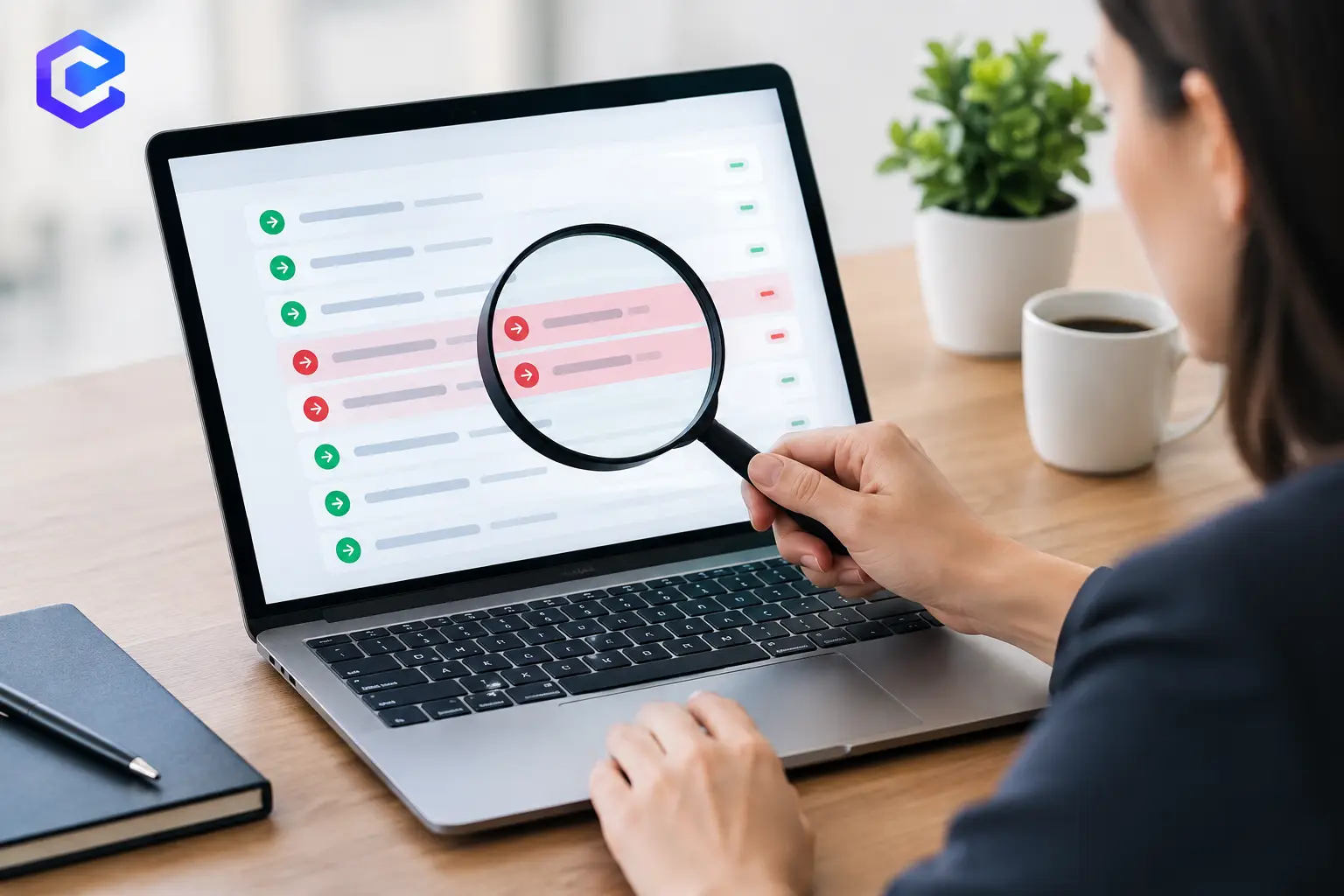
How to Identify Duplicate Transactions Fast
Learn how to identify duplicate transactions across exchanges, wallets, and imports before they distort your crypto portfolio and tax reports at filing.
A $2,000 BTC purchase shown twice is not a minor dashboard issue. It can overstate your exposure, distort realized gains, create a false deposit balance, and leave you questioning which number belongs in your tax report. Knowing how to identify duplicate transactions is a core operational skill for anyone tracking crypto across exchanges, wallets, and multiple import sources.
Duplicates are common because crypto activity moves through fragmented systems. An exchange may report a trade, a connected wallet may show the withdrawal, and a CSV import may introduce the same activity again. The fix is not to delete every similar-looking record. It is to determine whether two records represent the same economic event or two legitimate events that happened to look alike.
What Counts as a Duplicate Transaction?
A duplicate transaction is the same underlying activity recorded more than once in your portfolio or tax data. It may be an identical exchange trade imported twice, the same wallet transfer captured through two connection methods, or a transaction that remains after you replace a manual CSV with an API connection.
The key distinction is between duplicate records and related records. A withdrawal from Exchange A and a deposit into your personal wallet are usually two sides of one transfer. They should be linked when possible, not treated as separate taxable disposals and acquisitions. By contrast, two ETH purchases for the same dollar amount on the same day may be separate trades, especially during active trading periods.
This is why transaction matching requires context. Amount alone is not enough.
How to Identify Duplicate Transactions Reliably
Start with the transaction history rather than the portfolio total. A balance discrepancy tells you something is wrong, but the ledger is where you can verify the cause. Filter by asset, date range, transaction type, and source account to narrow the review.
Compare the transaction fingerprint
Every transaction has a practical fingerprint: timestamp, asset, quantity, value, transaction type, account, and reference ID. For on-chain activity, the transaction hash is usually the strongest identifier. For centralized exchanges, order ID, trade ID, fill ID, or transfer ID may be available.
Records with the same source, identical asset amount, matching timestamp, and the same reference ID are almost certainly duplicates. Records that differ only by a few seconds can still be duplicates if an API sync retried an import or if an exchange reports both an order and a fill in a confusing format.
Review these fields together:
- Transaction type: buy, sell, deposit, withdrawal, swap, reward, fee, or transfer
- Asset and quantity: including any fee charged in a separate asset
- Timestamp and timezone: exchange exports may use UTC while other files use local time
- Source and destination: the exchange, wallet address, or connected account involved
- Unique ID: trade ID, order ID, transfer ID, or blockchain transaction hash
A match across several of these fields is more meaningful than a match on dollar value. Stablecoin transfers, recurring buys, and common round amounts can create false matches when value is your only test.
Check whether you have overlapping data sources
Most duplicate problems begin with an import overlap. For example, you may connect an exchange by API, upload a historical CSV for the same account, then add the exchange's wallet addresses separately. Each connection can be valid, but the combination may capture the same events multiple times.
Review every source feeding your records. Look for an old CSV that covers dates now handled by an API connection, a former exchange account added twice under different labels, or both a blockchain explorer import and wallet sync for the same address. If the same account appears through two methods, define which source is authoritative for each period.
APIs are generally better for ongoing synchronization because they can retrieve reference IDs and status changes. CSV files are useful for unsupported history, corrections, or older account data. The trade-off is that CSV imports require stricter date controls and more manual reconciliation.
Separate transfers from taxable events
Internal transfers are one of the most expensive places to make a classification error. If you send 1 ETH from an exchange to a self-custodied wallet, the withdrawal and deposit may appear as two incoming records from separate sources. That does not mean you received 2 ETH, nor does it normally mean you created two taxable events.
Match transfers using the asset, net amount, time window, known addresses, and network fee. The outgoing side may be slightly larger than the incoming side because the network fee was deducted. A transfer of 1.0000 ETH out and 0.9987 ETH in may still be a single movement, not a duplicate plus a separate loss.
Do not force a match when the evidence is weak. A same-day USDC withdrawal and deposit can belong together, but active traders may also move identical amounts multiple times. Confirm the destination address, blockchain hash, or exchange transfer record before merging them.
Look for repeated imports after connection changes
Duplicate transactions often appear after a workflow change rather than after a trade. Common examples include reconnecting an API key, importing a corrected exchange file without removing the original, or adding a new tax year export that overlaps with prior history.
Sort transactions by import date if that information is available. A sudden block of repeated activity beginning on the day you added a connection is a clear signal. Compare the earliest and latest transaction dates in the new source against existing records before accepting the import.
Also watch for partial overlap. A CSV covering January through December can duplicate only the months already retrieved by an API. Removing the entire file may erase legitimate older activity, so isolate the overlapping period first.
A Practical Review Workflow
Use a controlled process instead of cleaning records one by one at random. First, reconcile your current asset balances against exchange balances and wallet balances. Then investigate material discrepancies, starting with high-value assets and high-frequency accounts.
Next, filter for records with identical quantities and close timestamps. Confirm their IDs and sources. Mark confirmed duplicates for exclusion or deletion according to the system's audit controls, but keep a record of why the adjustment was made. A clean audit trail matters when you revisit cost basis months later.
After removing duplicates, review your transfer matching and realized gain totals. A duplicate buy can inflate holdings and cost basis. A duplicate sell can inflate proceeds and taxable gains. A duplicated transfer may create an artificial disposal if the system cannot recognize it as movement between accounts you control.
Finally, rerun the reconciliation. Your holdings should align closely with the balances at connected exchanges and wallets after accounting for pending transactions, staking locks, derivatives collateral, and unsupported assets. Small differences may be timing-related. Large or persistent differences need investigation before you rely on performance or tax reports.
Prevent Duplicate Transactions Before They Start
The most efficient cleanup is the one you never have to perform. Maintain one connection strategy per account whenever possible: use read-only API access for ongoing exchange data and reserve CSV uploads for periods or records the API cannot provide. Label every source clearly, including account ownership and date coverage.
Before adding a new wallet or exchange, check whether it is already represented through another connection. Before importing a file, inspect its date range, transaction count, and identifiers. Keep original exports in a separate archive so you can verify source data without re-uploading it.
A centralized operations view can make this much easier. The Crypto Hub brings exchange and wallet activity into one read-only dashboard, helping traders review holdings, transaction history, and tax-relevant records without giving a third party trading authority. That visibility is useful only when source coverage is organized, so connection hygiene still matters.
When Similar Transactions Are Not Duplicates
Avoid deleting records just because they share an amount, date, or asset. Recurring purchase plans can create nearly identical BTC buys. An order may fill in multiple executions at the same price. Derivatives platforms may generate separate opening, funding, settlement, and fee entries tied to one position. Each can be economically distinct and may affect reporting differently.
Rewards and staking transactions also deserve extra care. A platform may issue several small rewards at the same time, while a separate sweep transaction moves them into your available balance. The correct treatment depends on how the platform records the event and what actually reached your account.
Precision beats speed here. Verify the source record, preserve supporting IDs, and only remove or merge entries when the evidence supports it. A clean transaction ledger gives you more than a better dashboard - it gives you a defensible foundation for portfolio decisions and tax reporting when the numbers need to hold up.