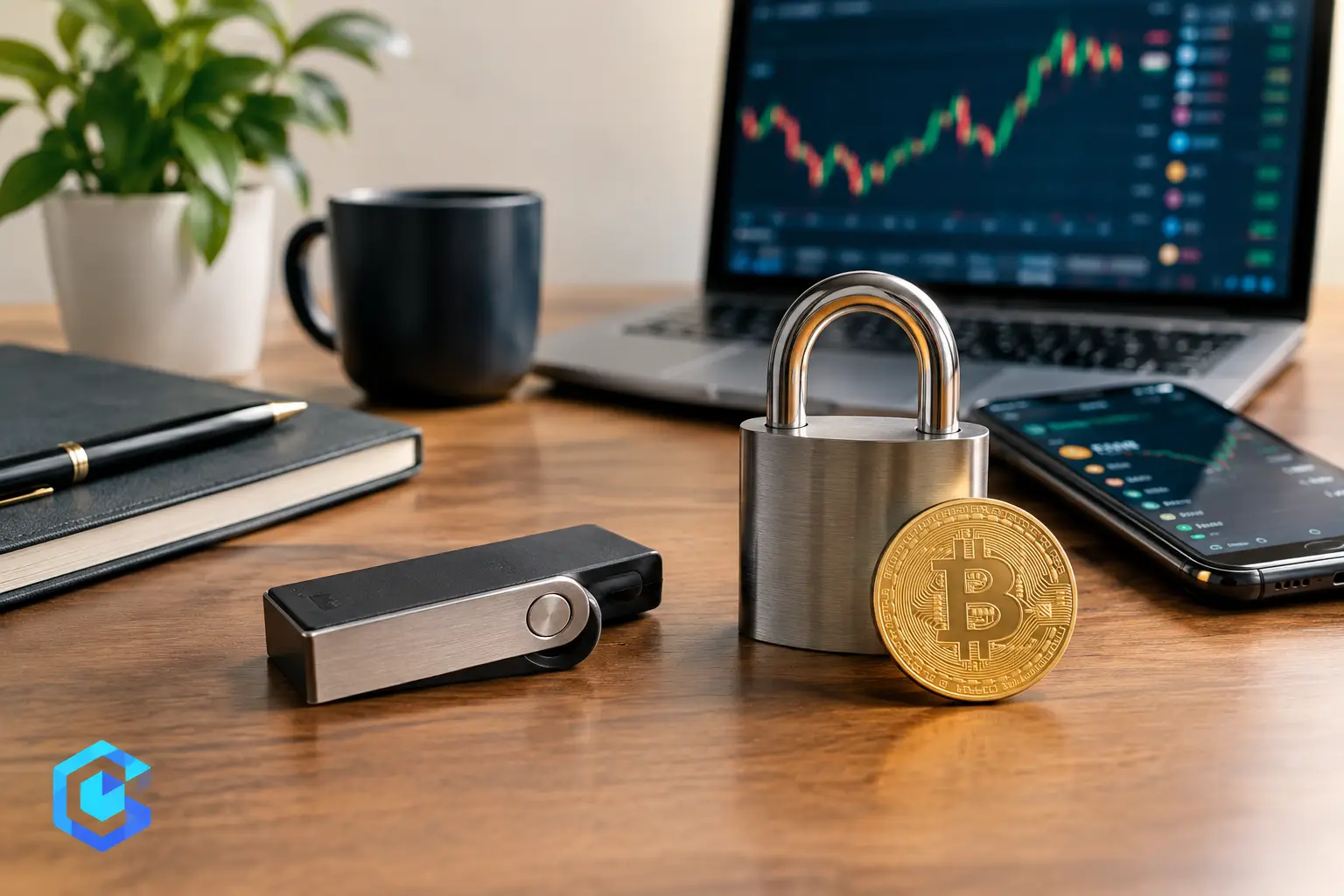
Top Crypto Security Practices for Active Traders
Top crypto security practices for traders: protect exchange access, wallets, API keys, and tax records without sacrificing speed or visibility at scale.
A compromised exchange login can turn a well-managed portfolio into an emergency in minutes. For active traders, the top crypto security practices are not a one-time checklist. They are an operating system for protecting accounts, wallets, API connections, transaction approvals, and the financial records behind every trade.
Security should not force you back into spreadsheets or slow every decision. The goal is controlled access: keep funds, identity data, and signing authority protected while maintaining a clear view of activity across exchanges and wallets.
Top Crypto Security Practices Start With Account Control
Most crypto losses do not begin with an advanced blockchain exploit. They start with a reused password, a convincing phishing page, a compromised email account, or an API key with more permissions than it needs. Your exchange account is a high-value target, so treat it differently from a standard online account.
Use a password manager to generate a unique, long password for every exchange, wallet service, portfolio tool, and email account. The email address used for crypto should have the same protection, because email recovery can become the path to an account takeover.
Enable phishing-resistant two-factor authentication wherever an exchange supports it. A hardware security key is generally stronger than app-based authentication, and both are preferable to SMS codes. SIM-swap attacks remain a practical risk for traders who use phone numbers as their only second factor. Store backup codes offline, in a secure physical location, rather than in an email inbox or cloud note.
Exchange security settings deserve a quarterly review. Confirm that withdrawal address allowlists, login alerts, device approvals, anti-phishing codes, and withdrawal locks are enabled when available. These controls may add a few minutes when you need to move funds, but that is a reasonable trade-off for accounts holding meaningful balances.
Apply Least Privilege to Every API Key
API-based portfolio tracking is useful because it eliminates the need to manually enter transactions across multiple venues. It also introduces a clear responsibility: every connection should have only the permissions required for its job.
For a tracking platform, create read-only API keys. Do not enable withdrawal permissions. Do not enable trading permissions unless a specific workflow genuinely requires them, and avoid using a single key for both reporting and execution. If an exchange supports IP allowlisting, use it for API keys that connect from a fixed, trusted environment.
Review your API inventory regularly. Delete keys associated with tools you no longer use, expired trials, old devices, or former workflows. Name keys clearly by platform and purpose so you can identify them during an audit or incident. An unlabeled key from two years ago is not operational convenience. It is unmeasured exposure.
There is a trade-off with IP restrictions: traders who move between networks or travel frequently may find them inconvenient. In that case, read-only permissions and short review cycles become even more important. Convenience should never result in an API key that can transfer funds.
Separate Trading Capital From Long-Term Holdings
Hot wallets and exchange balances serve a purpose. They provide access for trading, decentralized finance activity, and transfers. They should not automatically become the storage location for every long-term holding.
A practical approach is to define tiers. Keep only the capital needed for active activity in exchange accounts or hot wallets. Move longer-term holdings to cold storage, where private keys remain offline. The right split depends on your strategy, liquidity needs, and transaction frequency, but the principle is consistent: reduce the amount exposed to always-connected environments.
Hardware wallets protect private keys from many forms of malware, but they do not protect you from approving a bad transaction. Verify the receiving address and transaction details on the device screen, not only in your browser. For a new destination address, send a small test transaction before moving a larger amount.
Seed phrases require strict physical security. Never store them in screenshots, email drafts, cloud drives, password manager notes, or messaging apps. A durable offline backup stored in a controlled location is the baseline. For larger holdings, consider whether a multisignature arrangement or professionally designed inheritance plan fits your risk profile. These options add complexity, so they are most useful when the value at risk justifies the additional process.
Treat Every Signature as a Financial Decision
On-chain activity creates a different security model from centralized exchange trading. There may be no support team, reversal process, or account recovery after you sign a malicious approval or send funds to the wrong address.
Before connecting a wallet to a decentralized application, verify the domain through a trusted source and inspect the exact URL. Fake sites often use minor spelling changes, sponsored search placements, or copied interfaces to capture wallet connections. Never rely on direct messages offering support, urgent recovery help, whitelist access, or a private investment opportunity. Legitimate teams do not need your seed phrase, private key, or remote access to help you.
Read wallet prompts carefully. An approval that grants unlimited token spending is not the same as a swap for a specified amount. Revoke old token approvals you no longer need, particularly after testing new protocols or using temporary wallets. Maintain separate wallets for long-term assets, active DeFi use, and experimental applications. Segmentation limits the damage if one wallet interacts with a malicious contract.
Build Visibility Without Giving Up Custody
Fragmented crypto operations create their own security problem. When balances, open positions, transfers, and cost basis data are spread across multiple exchanges and wallets, it becomes harder to spot unauthorized activity or recognize a missing transaction.
Centralized visibility should not require centralized custody. A read-only dashboard can consolidate portfolio data while leaving funds on the exchanges or in the wallets you control. That distinction matters: reporting access is not execution authority.
The Crypto Hub is designed around this model, using read-only exchange API connections to bring portfolio monitoring, performance analysis, education, and tax reporting into one command center. Use alerts for meaningful price levels, but also establish a routine for reviewing unexpected balance changes, unfamiliar trades, new API activity, and transfers that do not match your records.
Keep personal and operational data organized as well. Use a dedicated email address for exchange accounts, avoid posting wallet balances or transaction details publicly, and be cautious with browser extensions. Install only extensions you need, review their permissions, and use a separate browser profile for crypto activity if possible. It reduces the chance that everyday browsing habits interfere with financial operations.
Protect Tax Data and Transaction History
Tax records are often overlooked in crypto security planning. Yet exchange statements, CSV exports, wallet addresses, cost basis records, and identity documents can expose a detailed picture of your finances. A criminal who cannot access your funds may still use this data for targeted phishing or identity fraud.
Download reports only to encrypted devices you control. Avoid sending raw transaction exports through unsecured channels, and limit access to accountants or collaborators who need it. Maintain a consistent source of truth for trades, transfers, fees, and wallet movements. Accurate records improve tax preparation, but they also help you identify anomalies when your reported history does not match an exchange or wallet balance.
For US traders and investors in regulated markets, clean records also reduce pressure at tax time. Rushing to reconcile a year of fragmented activity encourages mistakes, unsafe file sharing, and reliance on unknown services offering quick fixes.
Create an Incident Plan Before You Need One
Speed matters after a suspected compromise. Document the steps now, when you can think clearly. Your plan should include four actions:
- Freeze or lock the affected exchange account and disable the exposed API key.
- Change the password from a clean device, secure the associated email, and revoke active sessions.
- Move remaining assets only after confirming the destination wallet and device are safe.
- Record timestamps, transaction IDs, screenshots, and support case details for investigation and tax records.
Do not make impulsive transfers based on a message claiming your account is at risk. Go directly to the exchange or wallet interface through your saved, verified route. During an incident, phishing attempts often increase because attackers rely on urgency and confusion.
The strongest security setup is one you can follow consistently. Reduce permissions, separate funds by purpose, verify every signature, and keep your activity visible. That discipline protects more than a portfolio balance. It preserves your ability to act with clarity when the market, or your security posture, demands it.