Are Wallet Transfers Taxable? Know the Rules
Are wallet transfers taxable? Learn when moving crypto is non-taxable, when fees, bridges, swaps, and ownership changes can create reportable events, too.
6 min readby The Crypto Hub
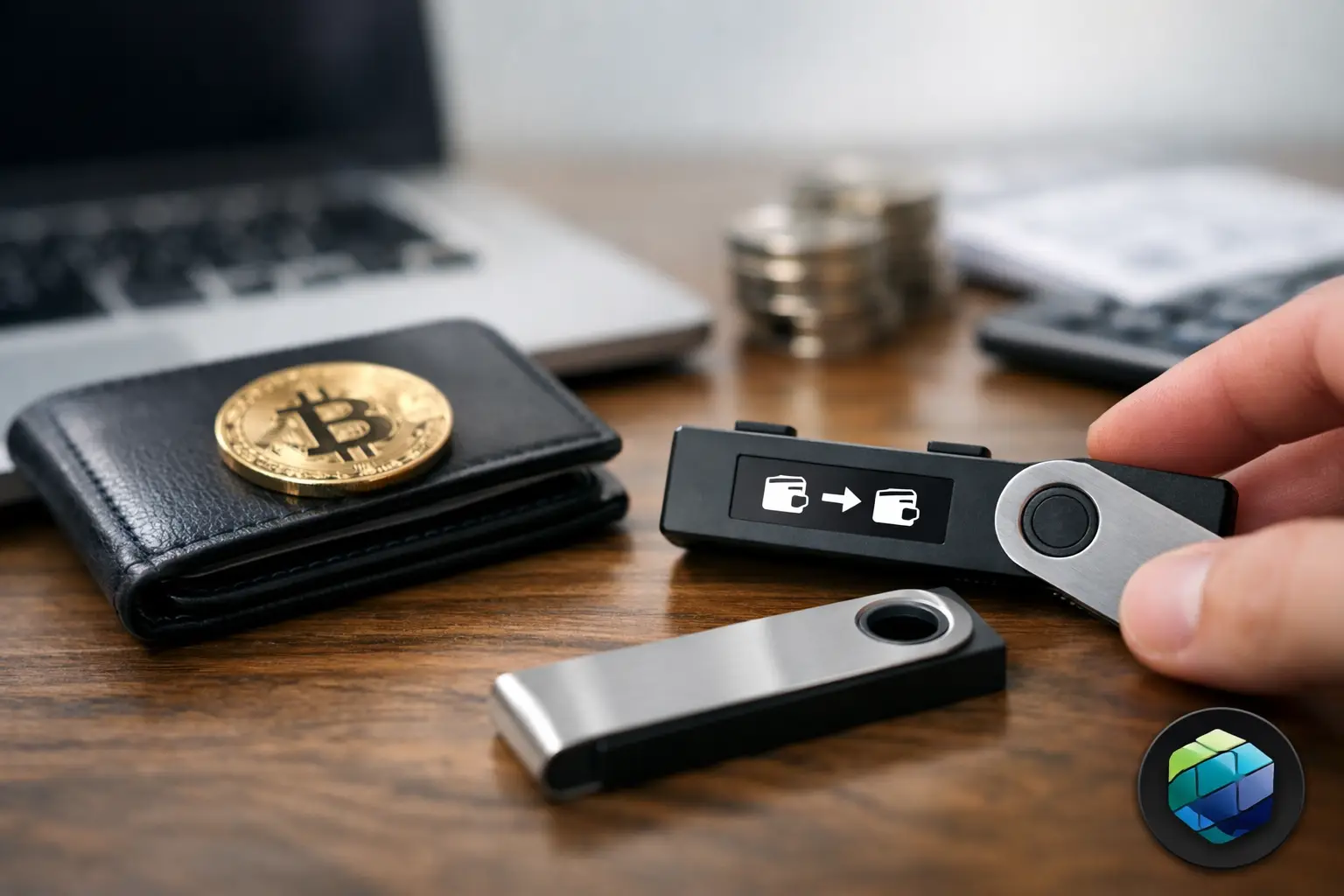
Moving 2 ETH from Coinbase to a hardware wallet may create an on-chain record, but that does not automatically make it income or a capital gain. So, are wallet transfers taxable? Usually not when you move the same asset between wallets and exchange accounts you own. The operational detail that matters is control: if beneficial ownership does not change and the asset is not exchanged, the transfer is generally not a taxable disposition.
That simple rule becomes less simple when gas fees, bridges, wrapped assets, shared accounts, or incomplete transaction records enter the picture. For active traders, the goal is not merely to label a transfer correctly. It is to preserve cost basis, acquisition dates, and lot history across every platform so a non-taxable move does not become a reporting problem later.
Are wallet transfers taxable in the US?
In most straightforward cases, no. A transfer from one wallet you control to another wallet you control is not a sale, trade, or payment. The same generally applies when you withdraw crypto from an exchange to a self-custody wallet, deposit it from a wallet to an exchange, or consolidate assets from several addresses into one wallet.
The key phrase is “you control.” Tax treatment is driven by what happened economically, not by whether a blockchain transaction occurred. If you sent 0.5 BTC from your exchange account to your cold wallet and still own that same 0.5 BTC, you have not realized a gain or loss simply because the Bitcoin changed addresses.
A transfer is still worth tracking. Your original purchase date and cost basis should travel with the asset. If the withdrawal is not matched to the corresponding deposit in your records, portfolio and tax software may read it as a disposal at one platform and a new acquisition at another. That can overstate gains, understate holdings, and create a return that is difficult to reconcile.
The taxable event is usually the transaction around the transfer
Crypto tax rules generally focus on dispositions. A disposition occurs when you sell crypto for dollars, trade one asset for another, spend crypto, or otherwise give up ownership in exchange for value. Sending assets to another address is different from exchanging them.
For example, buying SOL on an exchange and then transferring it to a Phantom wallet is normally a non-taxable transfer. Swapping that SOL for USDC after it reaches the wallet is a taxable trade. The transfer did not create the tax result. The swap did.
This distinction matters when reviewing a high-volume transaction history. A wallet may show hundreds of outgoing transactions, but only some represent taxable activity. Your records need enough context to distinguish a personal wallet transfer from a sale, a DeFi interaction, or a payment.
Fees can create a small taxable disposal
Network fees are the most commonly overlooked exception. If you pay gas in ETH to move USDC, you are using ETH to pay for a service. In the United States, that payment can be treated as a disposition of the ETH used for the fee.
The gain or loss is generally calculated using the ETH fee’s fair market value at the time of the transaction minus its allocated cost basis. The dollar amount may be small, but frequent on-chain activity can produce hundreds of fee transactions. Ignoring them can leave gaps in both holdings and gain-loss calculations.
The transfer itself remains non-taxable. The fee paid in crypto may be reportable. Whether that fee is deductible depends on the facts and current tax rules, including whether the activity is personal investing, a trade or business, or connected to another taxable transaction. Do not assume every gas fee creates a deduction simply because it appears on a blockchain explorer.
When a wallet move may not be a simple transfer
Some transactions look like transfers in a wallet interface but change the asset, ownership, or tax position. These require closer review.
- Bridging assets across networks: A bridge may lock an asset on one chain and issue a representation on another. The treatment of certain bridge transactions remains fact-specific and can depend on the protocol mechanics and the tax position taken.
- Wrapping and unwrapping tokens: Converting ETH to WETH, or using another wrapped token structure, may be viewed differently depending on the asset mechanics and applicable guidance. Do not automatically treat every wrap as invisible for tax purposes.
- Transfers to another person: Sending crypto to a friend, family member, employee, vendor, or business is not a self-transfer. It may be a gift, payment, compensation, sale, or capital contribution, each with different reporting implications.
- Transfers to a platform you do not control: Depositing crypto into an account in someone else’s name, a managed account, or a lending arrangement may involve a change in beneficial ownership or additional taxable events.
The practical test is direct: did you retain ownership of the same asset, or did the transaction give you something different, give value to someone else, or place the assets under a different legal arrangement? If the answer is unclear, preserve the transaction details before assigning a tax label.
Transfers between exchanges need careful matching
Exchange-to-exchange transfers are usually non-taxable if both accounts belong to you. They are also where cost-basis records most often break.
Suppose you buy 10,000 ADA on Exchange A, then send it to Exchange B. Exchange B may receive the ADA without knowing when you bought it or what you paid. If you later sell it there, the exchange’s tax document may not reflect your true basis. It may show an unknown basis, a zero basis, or no basis information at all.
A centralized transaction history solves the operational side of this issue. Match the withdrawal and deposit as one transfer, retain the original acquisition lot, and account for any network fee separately. The Crypto Hub is designed for this workflow, consolidating exchange and wallet activity so your holdings and tax records reflect the full path of an asset rather than treating each platform as a separate universe.
A clean workflow for transfer records
You do not need to manually document every wallet movement in a spreadsheet, but you do need a defensible audit trail. Keep the sending and receiving addresses, transaction hash, timestamps, asset quantity, and network fee. For exchange transfers, retain the withdrawal and deposit confirmations when available.
Then review transactions that fail to match automatically. A mismatch can happen because the received amount is lower after fees, an exchange batches withdrawals, tokens arrive on a different network, or the receiving transaction occurs hours later. It can also signal something more meaningful, such as a bridge, a swap, or a transfer to a third party.
For tax reporting, preserve your original lot information: acquisition date, cost basis, quantity, and holding period. This matters whether you use FIFO, LIFO, HIFO, or specific identification where available and properly documented. A non-taxable transfer should not reset your holding period or erase the basis you established when you acquired the asset.
Common mistakes that turn into tax errors
The first mistake is treating every withdrawal as a sale. That can inflate taxable gains dramatically, especially for traders moving assets among exchanges and cold storage.
The opposite mistake is labeling every on-chain transaction as a transfer. If you sent crypto to pay for an NFT, collateralized it in a protocol, exchanged it through a router, or bridged it into a distinct token position, more analysis may be required.
Another frequent issue is assuming the exchange tax form is a complete record. Exchanges generally see activity inside their own systems, not your original acquisition basis from another platform or wallet. Your tax position needs to be calculated from your complete transaction history, not one account statement.
Finally, do not wait until filing season to investigate unknown transfers. A transaction becomes harder to classify when you no longer remember which wallet you controlled, what a smart contract did, or why a specific amount was sent. Reconcile activity regularly while the context is still available.
The control test should guide every classification
For most crypto holders, the answer to “are wallet transfers taxable” is reassuring: moving the same crypto between accounts you own is generally not taxable. But “generally” is doing real work. Fees, asset conversions, bridges, and transfers involving another person can change the result.
Treat wallet transfers as an accounting and recordkeeping task, not an afterthought. When every movement is matched, every fee is captured, and every lot remains connected to its original basis, tax reporting becomes far more accurate and far less dependent on memory when it matters most.
Share this article