Future of Crypto Portfolio Software
The future of crypto portfolio software is smarter, more compliant, and more unified across exchanges, wallets, taxes, and risk reporting.
7 min readby The Crypto Hub
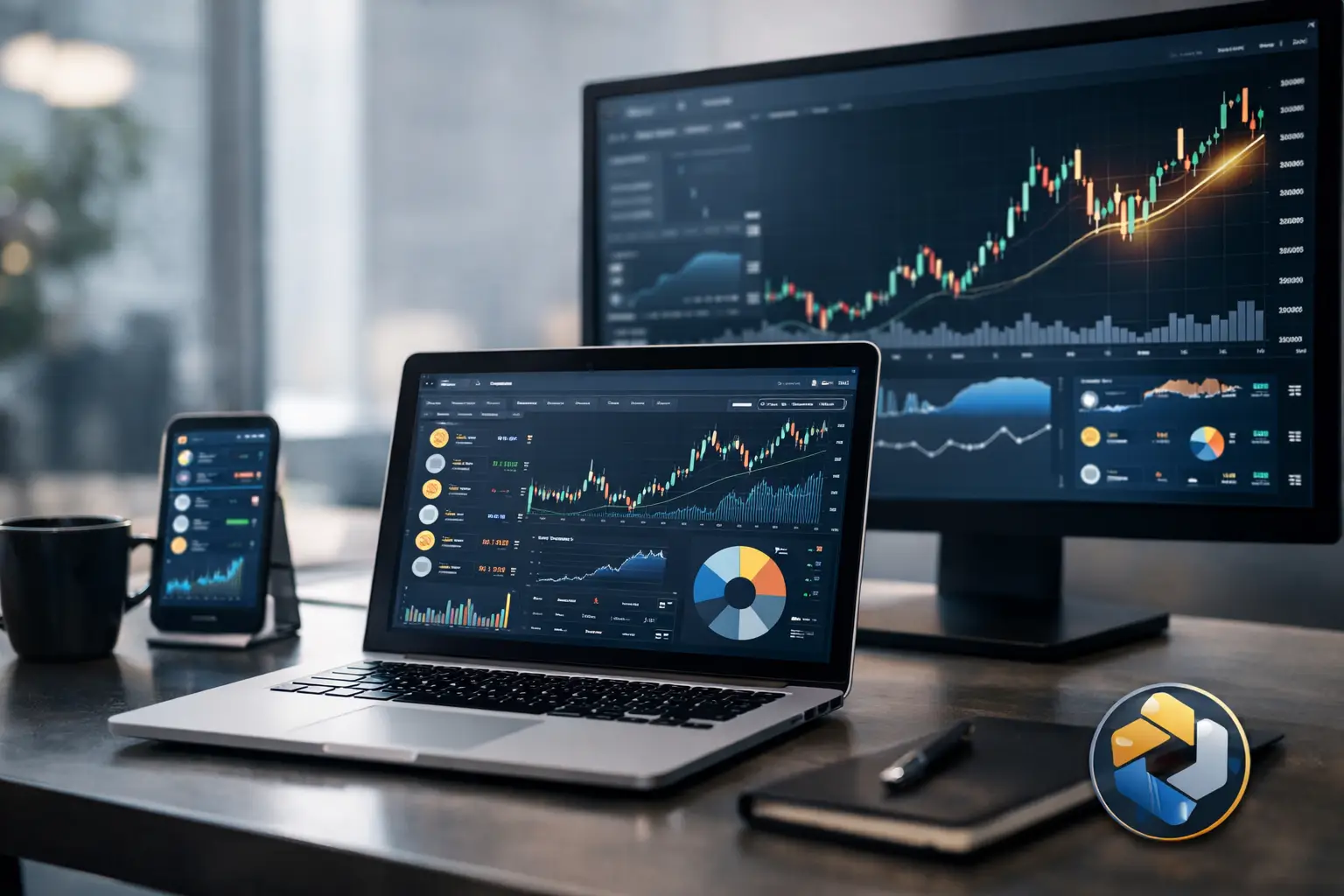
A trader with assets spread across six exchanges, two wallets, and a DeFi position does not need more charts. They need a control layer. That is the real context for the future of crypto portfolio software: not prettier dashboards, but better operational visibility across fragmented digital asset activity.
For serious users, the category is moving away from simple balance tracking and toward decision support, compliance readiness, and workflow consolidation. The platforms that matter over the next few years will not just tell users what they hold. They will help them understand exposure, monitor risk, document taxable events, and stay organized without giving up custody or handing over trading authority.
What the future of crypto portfolio software actually looks like
The next generation of portfolio software will look less like a watchlist and more like infrastructure. That shift matters because crypto activity is no longer confined to buying and holding on a single exchange. Users move between spot markets, perpetuals, staking, self-custody wallets, bridges, and on-chain protocols. When those activities are tracked in separate places, the cost is not just inconvenience. It is incomplete reporting, missed exposure, and tax confusion.
Future-ready platforms will be judged on how well they unify data from different environments into one usable view. That means exchange API aggregation, wallet-level visibility, historical cost basis tracking, allocation monitoring, and tax-lot awareness working together instead of existing as disconnected features. If one part of the stack is missing, users still end up back in spreadsheets.
This is also where non-custodial design becomes more important, not less. As users become more security-conscious, they will expect portfolio software to provide oversight without taking possession of assets or enabling trade execution. Read-only access is not a limitation in that model. It is a trust signal.
The biggest shift: from tracking balances to managing operations
Early crypto portfolio tools solved a narrow problem. They pulled balances from exchanges and translated them into a total account value. That was useful when portfolios were simpler and tax reporting was less scrutinized.
Now the market expects more. Active traders want to know how their allocation changed over time, how a derivatives position affects total exposure, which assets are creating concentrated risk, and whether realized gains are being categorized correctly. Investors who use multiple venues want a single record that does not break every time an exchange formats exports differently.
That is why the future of crypto portfolio software will be defined by operational depth. The software needs to support the full management cycle: ingestion, normalization, analysis, alerts, recordkeeping, and reporting. A platform that only handles one or two of those steps may still be useful, but it will not become the primary command center for advanced users.
Better data normalization will separate serious platforms from basic tools
Crypto data is messy. Trade history can vary by exchange. Token symbols can conflict. Transfers between owned accounts are often misclassified. DeFi transactions can look unintelligible without context. If the underlying data model is weak, every downstream feature becomes less reliable.
The strongest software in this category will invest heavily in normalization. That means correctly identifying deposits versus buys, internal transfers versus disposals, staking rewards versus ordinary income, and derivative events versus spot trades. It also means preserving a clear audit trail when records are edited or reclassified.
This is not glamorous product marketing, but it is where trust is earned. A trader does not need software that looks smart if they have to manually fix hundreds of records before tax season. They need software that reduces cleanup work at the source.
Tax functionality will move from add-on feature to core requirement
Tax reporting is still treated as a seasonal problem by many users, but the market is moving toward year-round tax awareness. That is a major clue about where portfolio software is headed.
The future product does not wait until April to surface issues. It identifies taxable events as they happen, tracks cost basis consistently, and gives users visibility into how accounting methods such as FIFO, LIFO, or HIFO affect outcomes. It flags missing transactions early and makes it easier to reconcile across exchanges before the record set becomes unmanageable.
For US-based users especially, this matters because digital asset reporting expectations are getting tighter, not looser. Software that combines portfolio visibility with integrated tax preparation will have a structural advantage over tools that force users to export data into a separate system later. Fewer handoffs usually mean fewer mistakes.
There is also a practical point here. Traders do not think of taxes as a feature they want. They think of them as a problem they want contained. The platforms that make tax compliance part of normal portfolio management will be better aligned with how people actually behave.
Real-time alerts will become more context-aware
Price alerts are common. Useful alerts are not.
Most current tools can tell users that Bitcoin moved 5% or that a token crossed a price threshold. Future portfolio software will go further by making alerts portfolio-aware. Instead of only reacting to market price, the system will react to user-specific conditions: allocation drift, concentration risk, unusual account activity, funding rate exposure, or a material change in unrealized gains.
That matters because active users do not manage the market in the abstract. They manage their own exposure. A 10% move in an asset may be irrelevant if it represents 1% of the portfolio, but critical if it has grown into a 28% position across multiple accounts.
The same logic applies to operations. Alerts should eventually cover incomplete syncs, exchange API disconnects, duplicate transaction patterns, and records likely to produce tax errors. The best software will not just notify users about volatility. It will notify them about blind spots.
Education will become embedded, not separate
A surprising weakness across crypto tools is the gap between what the dashboard shows and what the user understands. Many platforms present advanced metrics without enough explanation, which pushes users back to social content, forums, or fragmented articles.
That gap creates an opportunity. In the future of crypto portfolio software, education will be built into the workflow itself. If a user is reviewing cost basis methods, the platform should explain the implications in plain language. If they are looking at realized gains or derivative exposure, they should be able to understand what changed and why it matters without leaving the product.
This is especially valuable for users who are moving from casual investing into more structured portfolio management. They do not need hype. They need context they can use immediately. That is one reason an all-in-one model has long-term advantage. When tracking, education, and reporting live in the same environment, users spend less time translating between systems.
AI will help, but only where precision is protected
AI will shape this category, but not in the vague way many product pages suggest. Traders and tax-conscious investors do not need a chatbot telling them market sentiment. They need faster classification, clearer anomaly detection, and better explanations of what changed in their records.
Used well, AI can help categorize messy transaction data, surface missing cost basis links, identify possible duplicate imports, and explain portfolio movements in plain English. It can also help users troubleshoot sync issues or understand the likely tax treatment of a transaction type before they finalize reporting.
But there is a trade-off. In crypto operations, confidence without accuracy is dangerous. Software providers will need to be disciplined about where AI makes suggestions and where deterministic logic still governs the record. Users should be able to see what was inferred, what was confirmed, and what still needs review.
In other words, AI will be most useful as an assistant layer, not a replacement for structured accounting logic.
The winners will reduce tool sprawl
The market does not need another narrow utility. It needs fewer disconnected ones.
That is why the strongest platforms will continue moving toward consolidation. Portfolio tracking, historical performance, tax reporting, exchange aggregation, and guided learning all belong in the same command environment when the user goal is control. Every extra app creates another import, another reconciliation step, another point of failure.
This does not mean every platform should try to become an exchange, broker, or custodian. In fact, there is a strong case for the opposite. Independent software that stays focused on oversight, organization, and reporting can often deliver more trust and flexibility than platforms that mix analytics with execution. The Crypto Hub fits this direction well because it approaches the problem as a centralized, read-only operations layer rather than a place where users surrender control of assets.
Why this matters now
Crypto portfolios are not getting simpler. Users are adding more venues, more transaction types, and more reporting obligations. That means the future of crypto portfolio software will be decided by practical questions: Can it unify fragmented data? Can it preserve accuracy at scale? Can it help users stay compliant without turning tax prep into a separate project? Can it improve visibility without increasing custody risk?
The platforms that answer yes to those questions will become part of the daily operating stack for serious traders and investors. The rest will remain nice-looking trackers.
A useful test is simple: if your portfolio software disappeared for a week, would you lose visibility, lose records, or lose control? The products shaping this category are working to make sure the answer is no.
Share this article